
Halloween already has enough pretend scares. A loose porch step, overloaded outlet, or pet slipping through an open door shouldn’t be one of them.
October brings a few changes around the house. More visitors may be walking up the driveway after dark. Decorations and extension cords appear outside. Space heaters and fireplaces come back into use after months in storage.
A quick safety check before Halloween can help protect the people and pets who live in your home, as well as everyone who comes to the door.
Prepare the Path, Porch, and Decorations
Start at the sidewalk and walk toward your front door as though you’re visiting for the first time.
Are the steps easy to see? Does the handrail feel secure? Would a child wearing a mask notice a hose, cord, or uneven section of pavement?
Before trick-or-treaters arrive:
- Clear wet leaves, branches, toys, and hoses from walking areas.
- Secure loose rugs and doormats.
- Check steps for cracks, loose boards, or uneven surfaces.
- Keep ramps and accessible routes open.
- Turn on porch and pathway lights before dark.
- Move cords, pumpkins, and decorations away from foot traffic.
Decorations should add atmosphere without blocking doors, windows, hallways, or other exits. Battery-operated candles or glow sticks are a safer choice for jack-o’-lanterns than open flames.
Keep paper, fabric, dried plants, and artificial cobwebs away from fireplaces, space heaters, bulbs, and cooking areas. Check decorative lights for damaged plugs or exposed wires, and use outdoor-rated cords outside.
Be Careful Where Devices Are Charging
Phones aren’t the only items powered by lithium-ion batteries. Portable chargers, toys, tools, scooters, and e-bikes often use them too.
- Use the charger made for the device.
- Charge devices on a hard, stable surface rather than a bed, sofa, or upholstered chair.
- Keep larger devices away from doors and hallways so they don’t block an exit.
- Stop using a battery if it swells, leaks, becomes unusually hot, smells strange, or makes popping or hissing sounds.
- Unplug devices once they’re charged.
- Take damaged or used batteries to an approved recycling location instead of placing them in household trash.
Check Heating Equipment and Alarms
Before the first cold evening, put heating equipment back into regular use:
- Inspect furnaces, chimneys, fireplaces, and space heaters, and schedule recommended maintenance.
- Keep portable heaters at least three feet from curtains, bedding, furniture, paper, and seasonal decorations.
- Place space heaters on a flat surface, plug them directly into a wall outlet, and turn them off before leaving the room or going to sleep.
- Make sure chimneys and vents are clear, use a sturdy fireplace screen, and keep furnishings away from the heat.
- Never use an oven or stovetop to warm the home.
- Test smoke and carbon monoxide alarms. Smoke alarms should be installed inside bedrooms, outside sleeping areas, and on every level of the home. Carbon monoxide alarms belong on each level and near sleeping areas.
If there’s an emergency in the home, everyone in the household should know how to get out, where to meet outside, and who will help children or anyone else who may need assistance. Once you’re outside, stay outside.
Give Pets a Quieter Place
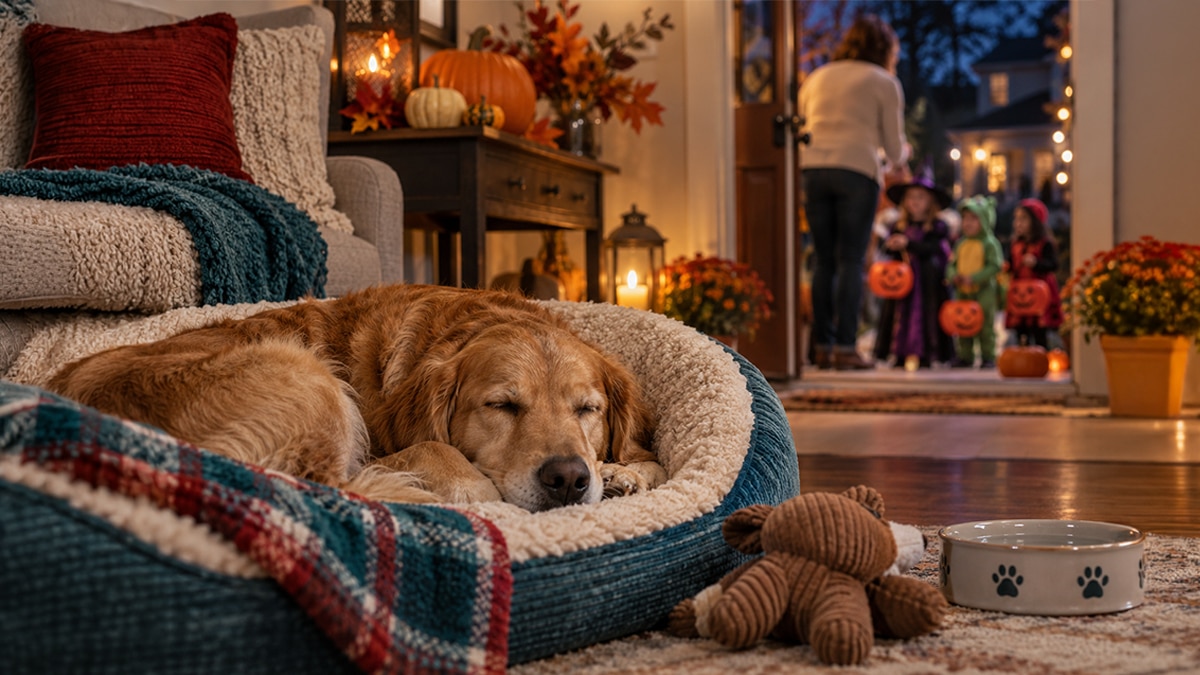
Halloween can be stressful for pets. The doorbell keeps ringing, strangers arrive in costumes, and the front door opens again and again.
For many animals, the safest place is a quiet room away from the entrance. Add familiar bedding, water, and a favorite toy. Check identification tags beforehand and keep leashes or carriers where you can reach them quickly.
Store candy well out of reach. Chocolate can be dangerous for dogs and cats, while sugar-free products containing xylitol can cause serious illness. Wrappers, glow sticks, cords, and small costume pieces can also become choking hazards.
Pets should be included in the household emergency plan. Keep medication, vaccination records, a leash or carrier, and a small supply of food together. Those details matter if you have to leave quickly or arrange temporary accommodations after a loss.
Build a Plan for the People Who Live There
An emergency plan only works if it reflects the needs of the household.
Think about who may need help hearing an alarm, reaching an exit, or getting safely outside. Consider mobility equipment, refrigerated medication, oxygen or other medical devices, service animals, and accessible transportation.
Keep insurance information, medication lists, important documents, and emergency phone numbers somewhere easy to find.
These details also matter when temporary housing is needed. For Adjusters, asking about pets, accessibility, schools, work locations, medical needs, parking, and transportation early in the claim can make the housing search more focused.
The closest available hotel or rental isn’t always the best fit. A household may need a kitchen, laundry access, a ground-floor entrance, space for a pet, or a location near a child’s school. The expected repair timeline and Loss of Use limits may also affect whether a hotel or longer-term furnished property is more appropriate.
If Your Home Becomes Unsafe
Preparation can lower the risk of an emergency, but it can’t prevent every fire, electrical issue, storm loss, or accident.
When a home is no longer safe to occupy, focus first on people and pets.
- Move to a safe location and call emergency services. Follow instructions from firefighters, police, utility crews, or other responders.
- Do not go back inside. Wait until the proper authority says it’s safe.
- Contact your Insurance Adjuster. Report the loss, ask what information is needed, and discuss whether temporary housing may be available.
- Document damage when it is safe. Photos, videos, notes, and an inventory may help support the claim.
- Explain the household’s needs clearly. Include the number of occupants, pets, accessibility needs, school and work locations, medical equipment, parking, and whether a kitchen or laundry facilities are needed.
- Keep receipts and written records. Save documentation for approved lodging, meals, transportation, pet care, and other displacement-related expenses.
Temporary housing and certain Additional Living Expenses may be available after a covered loss, depending on the policy, coverage limits, and carrier approval.
For Adjusters, the expected repair timeline is an important part of the housing decision. A hotel may work for the first night or several days. A furnished apartment, condominium, or single-family home may be a better fit when repairs will take longer. Recognizing that early may help prevent an unnecessary move later.
Helping Households Move Forward
CRS coordinates emergency hotel stays and longer-term housing, including furnished apartments, condominiums, and single-family homes. Depending on the placement, CRS may also arrange furnishings, utilities, leases, billing, extensions, special accommodations, and approved pet boarding.
CRS stays in contact with Policyholders and Adjusters as needs and timelines change. Through the CRS Managed Repair Program, Policyholders may also be connected with licensed, insured, and vetted contractors, while Adjusters receive updates on repair progress.
Halloween should have surprises. An unsafe home shouldn’t be one of them.
CRS Resources
- Temporary Housing Services: Learn about CRS Temporary Housing
- Pet-Friendly Housing & Pet Boarding: Explore CRS pet support and housing FAQs
- Managed Repair Program: Learn about the CRS Managed Repair Program